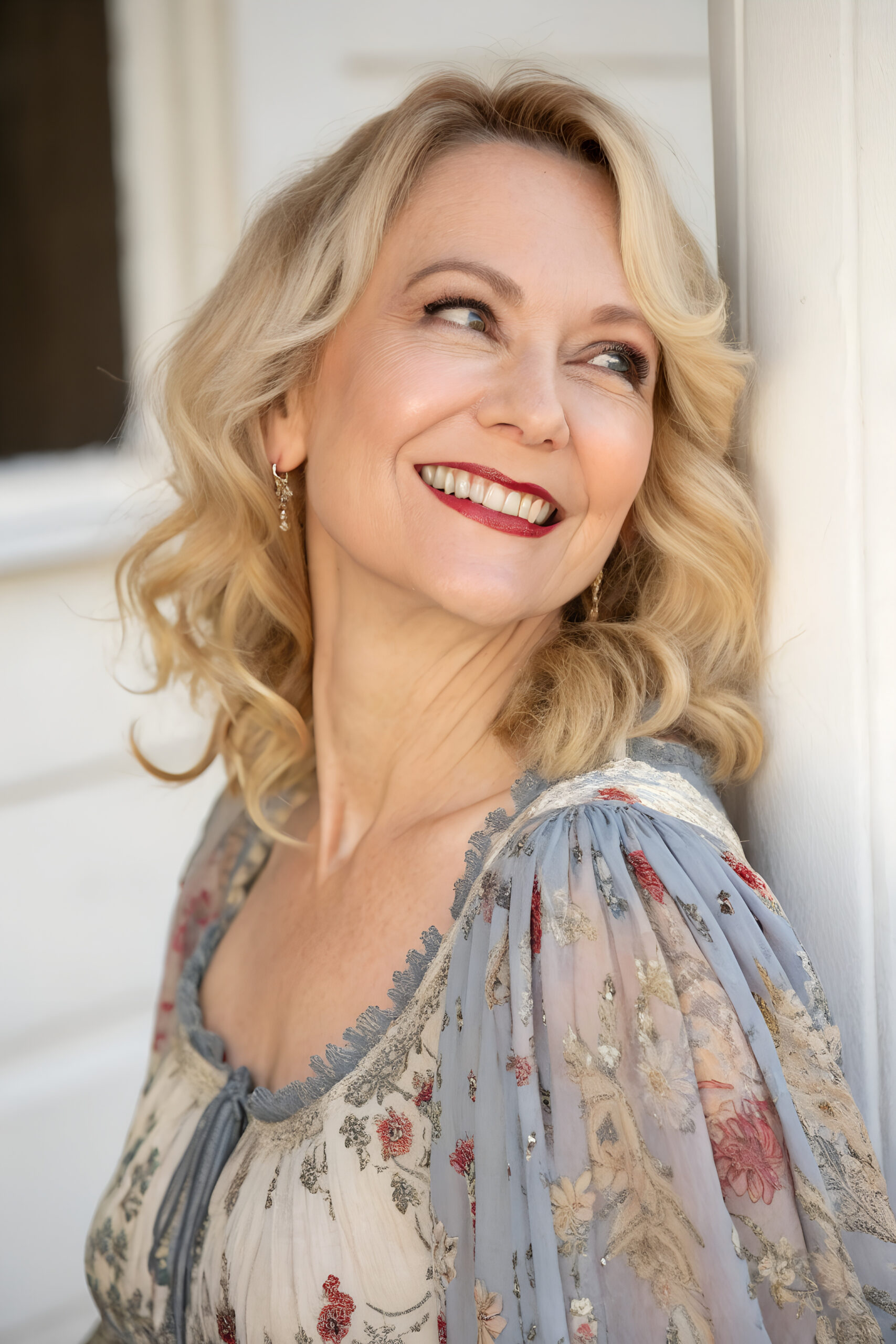
Clara Townes
“I write for the women whose stories were lost to history, and for the women today who feel lost in their own time. My ancestors taught me that sometimes the most radical act is to love fully in the face of an uncertain world—whether that world is 1775 or 2025. Every time portal I open, every magical artifact I create, every romance I weave across centuries is really an invitation: to remember that we carry our ancestors’ strength in our bones, and that love—real, transformative, transcendent love—has always been the most powerful magic we possess. The heart doesn’t recognize the boundaries of time. It only recognizes truth.”
Clara Townes writes with the authority of someone whose family tree is rooted deep in American soil—and haunted by the women who dared to be different. As a proud member of the Daughters of the American Revolution and descendant of the Townes family of New England, Clara carries the weight of ancestral memory in every word. Her lineage traces back to Jacob Towne, whose three sisters—Rebecca Nurse, Mary Eastey, and Sarah Cloyce—faced accusations during the Salem Witch Trials, their courage under persecution echoing through the centuries.
This intimate connection to early American history infuses Clara’s Echoes of Liberty series with an authenticity that can’t be researched—it can only be inherited. Writing time-touched historical romances set against the Revolutionary era, she understands that the past isn’t a distant country but a living presence, full of women whose stories were interrupted, whose voices were silenced, whose love stories were cut short by the harsh realities of their times.
Clara’s novels explore what happens when contemporary women, carrying their own modern heartbreaks, find themselves transported to an era where survival required different kinds of strength but love demanded the same vulnerable courage. Through magical artifacts that bridge centuries, she crafts tales where second chances aren’t just about finding love—they’re about finding the version of yourself that history tried to erase.
From her research desk surrounded by genealogical charts and colonial-era maps, Clara writes with the reverence of someone who knows these aren’t just stories—they’re reclamations. Every candlelit scene, every hearth-warmed conversation, every moment of intimacy blooming despite uncertainty carries the weight of honoring the women who came before.
 English